From White Sandy Beaches to Do No Harm: Why Waste Management Is Now Central to Fiji’s Tourism Story
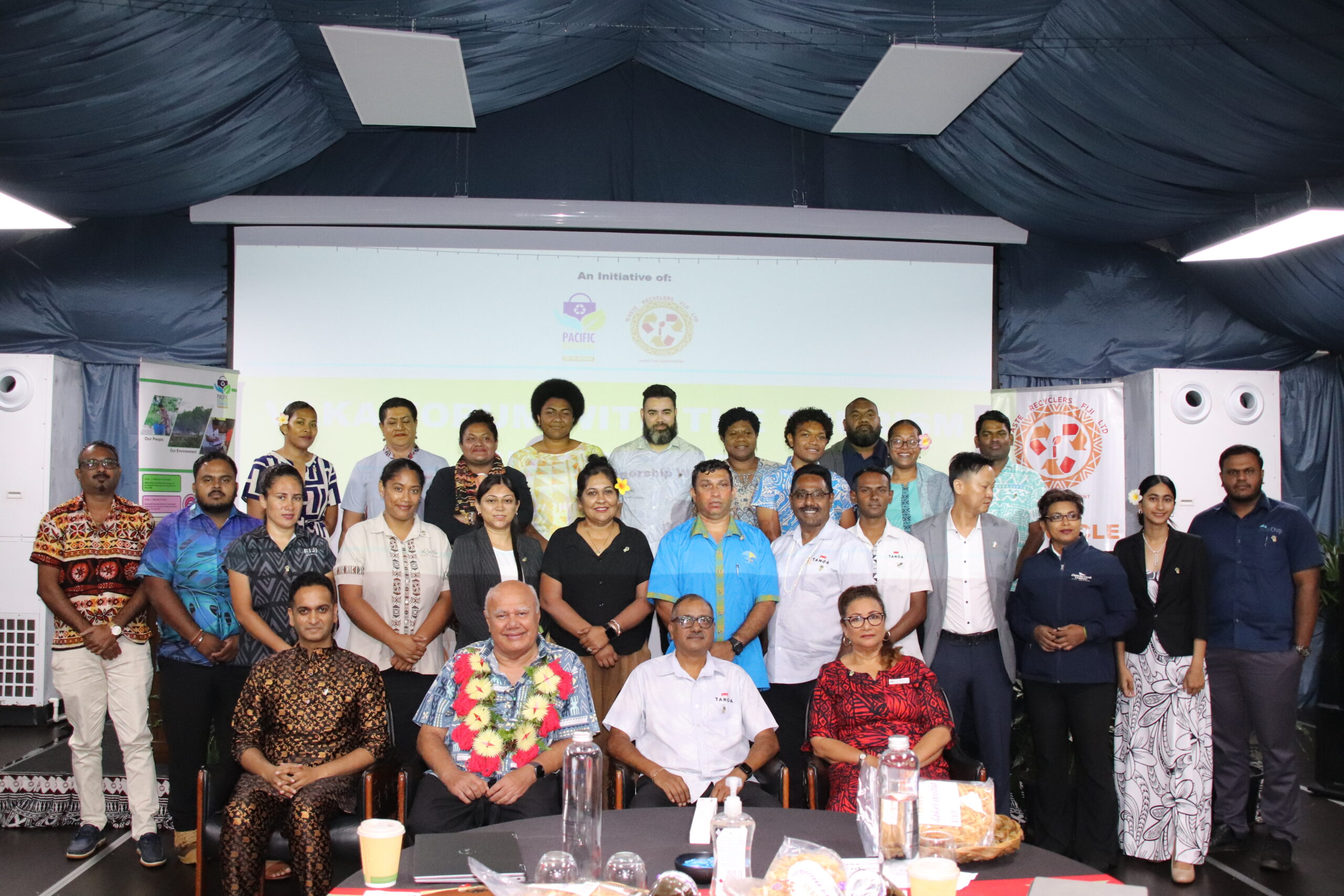
Pacific Recycling Foundation today convened its VAKA Forum with the Tourism Sector, bringing together resort and hotel executives, sustainability leads, and key tourism stakeholders in a focused dialogue on strengthening Fiji’s waste management systems through partnership, accountability, and circular solutions.
The VAKA Forum with the Tourism Sector, officiated by the Deputy Prime Minister and Minister for Tourism and Civil Aviation, Hon. Viliame Gavoka, is the second in PRF’s national VAKA Forum Series, following the inaugural forum with Municipal Councils, and is part of a structured national dialogue aimed at shifting Fiji from landfill dependency toward circular and recovery-based waste management systems.
PRF Founder Amitesh Deo said the engagement with the tourism industry was both deliberate and timely, recognising tourism as Fiji’s most important economic sector and a critical partner in building sustainable systems.
“Our message today is one of equal partnership,” Deo said.
“The recycling movement and the tourism sector are on the same journey. Together, we have the ability to bring about systemic and measurable change in waste management, while showcasing Fiji as a destination that genuinely does no harm to its people and environment.”
Deo highlighted that while many island destinations face waste management challenges, Fiji has a unique opportunity to differentiate itself globally by demonstrating real, on-the-ground action.
“Fiji competes with destinations like Bali, Tahiti, and the Maldives, all of which face serious waste management crises,” he said.
“What sets Fiji apart is that we have a grassroots recycling movement that is beyond talk. We are implementing solutions, collecting data, accrediting systems, and working with partners who are willing to lead.”
He stressed that modern travellers are increasingly seeking accountability, not just comfort.
“Visitors today want more than an air-conditioned room and a beautiful view. They want to know that their holiday is not harming the land, the ocean, or the people of Fiji. Recycling and responsible waste management are now part of Fiji’s tourism story,” stressed Deo.
Deo also emphasised that the waste management crisis cannot be placed on any single entity but must be addressed through shared responsibility.
“Some sectors have a larger environmental footprint, and tourism is a significant generator of recyclable materials. That reality also creates an opportunity for leadership.”
He noted that PRF’s approach is also grounded in social and environmental justice, particularly for communities often excluded from formal systems.
“At the heart of our work are the Collection Pillars of Recycling – mostly women, LGBTQI+ members, and men who depend on recycling for survival,” Deo said.
“When hotels recycle responsibly, they are not only protecting Fiji’s beaches and reefs, but they are also supporting livelihoods and dignity.”
Deo added as Fiji continues to position itself as a world-class destination, sustainability can no longer be an add-on.
“Happiness may come naturally in Fiji, but it must never come at the expense of our people or our land.”
PRF’s VAKA Forum – which stands for Voices, Alliances, Knowledge, and Action is designed to move conversations beyond discussion toward implementation. The VAKA Forum with the Tourism Sector will be followed by engagements with Collection Pillars of Recycling, Members of Parliament and Permanent Secretaries, civil society organisations, academic, donor and brand partners, faith-based organisations, development partners, and diplomatic missions.