Five-Day Cooperative Training Marks Next Step Ahead of Taveuni Waste Management Initiative Launch
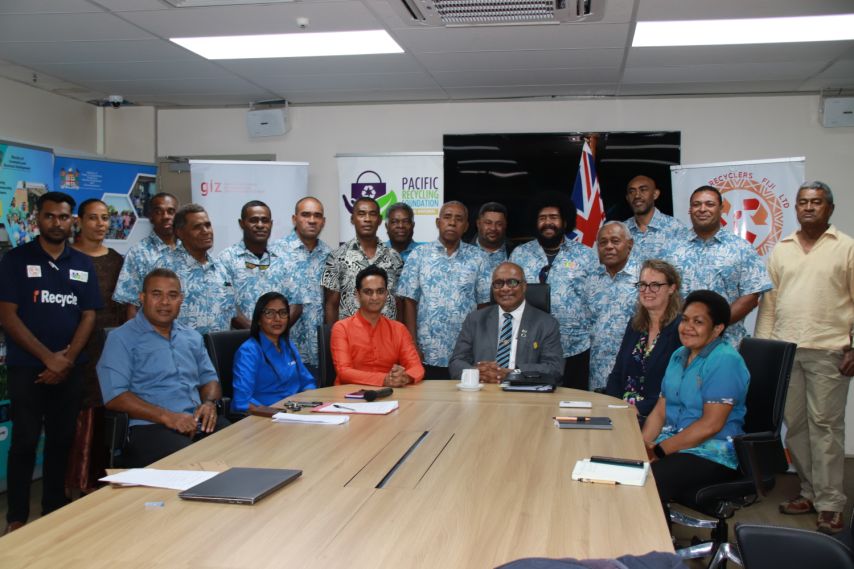
Preparations for the official launch of the Taveuni Waste Management Initiative have entered their next phase, with a five-day cooperative training programme commencing today to help build the local knowledge, capacity and structures needed to support its long-term implementation.
The Taveuni Waste Management Initiative is being implemented by the Pacific Recycling Foundation (PRF), with support from the CleanSeas – Marine Litter Prevention in Pacific Island Countries programme, jointly implemented by GIZ Pacific, the Secretariat of the Pacific Regional Environment Programme (SPREP) and The Pacific Community (SPC), in partnership with Fiji’s Ministry of Environment and Climate Change.
The Taveuni Waste Management Initiative is funded by the German Federal Ministry for the Environment, Climate Action, Nature Conservation and Nuclear Safety (BMUKN) under the ‘Marine Litter Action Grant – hubs around the globe program.’
The training, running from 2–6 November 2026, is designed to equip cooperative members with the knowledge and skills needed to play an active role in the recovery of recyclable materials and the development of a locally driven recycling system. The programme was officially opened today by the Deputy Prime Minister and Minister for Industries, Commerce, Business Development and Public Enterprises, Honourable Manoa Kamikamica.
The training forms part of the wider Taveuni Waste Management Initiative, which seeks to establish a more organised approach to recovering recyclable materials on an island renowned for its natural beauty, marine environment and tourism. With limited recovery of recyclables, addressing waste management challenges is important not only for the environment but also for protecting the natural assets that support local communities and the tourism sector.
Strengthening the management and recovery of waste on land is also important in reducing the risk of plastic and other discarded materials entering Taveuni’s waterways and surrounding marine environment.
The initiative takes a holistic approach that extends beyond recycling collection. It recognises the importance of empowering local communities, engaging schools in building awareness and responsible waste practices, and involving the tourism sector and businesses in strengthening waste management efforts across the island.
PRF’s engagement in Taveuni began in 2024 with an inaugural stakeholder meeting, followed by a Strategy Implementation Consultation that brought together community members, government representatives, tourism stakeholders, development partners and the private sector. These engagements helped shape and refine the initiative’s core components, including school engagement, tourism-sector participation and the formation of a community cooperative.
Earlier this year, PRF returned to Taveuni to undertake final planning and coordination with key stakeholders ahead of implementation. Building on the groundwork established through the earlier consultations, the five-day cooperative training represents the next practical step in strengthening local capacity ahead of the initiative’s official launch.
Through the five-day training, cooperative members will gain an understanding of cooperative values and principles, holistic recycling and waste management, financial management and financial literacy, human rights, and relevant legal rights and responsibilities. The programme is intended to strengthen the cooperative’s capacity to understand its role, manage resources responsibly and contribute to the long-term sustainability of the initiative.
PRF Founder Amitesh Deo said community participation must be supported by the right knowledge, resources and structures to create lasting outcomes.
“Taveuni is recognised for its natural beauty, but addressing the waste management challenges beneath that reputation requires a coordinated effort. We cannot approach recycling as simply collecting materials and moving them elsewhere. We need communities that are equipped to participate, schools that understand the importance of responsible waste practices, and businesses, including those in tourism, that recognise their role in the process. This initiative brings those elements together, with the cooperative playing an important role in building a locally driven approach that can deliver lasting benefits,” Deo said.
The initiative will also involve the Ministry of Industries, Commerce, Business Development and Public Enterprises, local government representatives, the cooperative, schools, tourism stakeholders and private-sector stakeholders, including Ashok Transport. Their involvement reflects the importance of collaboration across government, businesses, institutions and communities in developing an approach that responds to Taveuni’s needs.
GIZ Representative in the South Pacific and Head of Project CleanSeas – Preventing Marine Litter in Pacific Island Countries, Frauke Bartels said marine litter is an environmental challenge that affects our oceans, coastlines and communities across the Pacific.
“Addressing it requires more than awareness alone. It requires practical systems that allow waste to be collected, recovered, transported and recycled. This is why the Taveuni Waste Management Initiative is important. It brings together community participation, recycling, waste collection and partnerships with key stakeholders to help establish a system that can work over the long term. For GIZ and its CleanSeas programme, this is the kind of practical action needed to prevent marine litter at its source and strengthen waste management in Pacific Island countries,” said Bartels.
Over its two-and-a-half-year implementation period, the initiative will seek to recover a wide range of recyclable materials while measuring its environmental, social and economic impacts. By combining recycling activities with community capacity-building, education and cross-sector collaboration, the programme aims to support a more sustainable and locally driven approach to waste management in Taveuni.