Pacific Recyclers Alliance Secures Legal Registration – A Milestone for Grassroots Recycling Advocacy in the Pacific
Pacific Recyclers Alliance (PRA), comprising grassroots recycling organisations from six-member countries of Fiji, Samoa, Tonga, Solomon Islands, Papua New Guinea, and Vanuatu, has officially been registered as a legal entity in Fiji, marking a historic milestone for grassroots recycling advocacy across the Pacific.
The announcement was made by PRA President Amitesh Deo, who is also the Founder of Pacific Recycling Foundation (PRF). PRF serves as the Secretariat of PRA and will coordinate its operations from its office in Koronivia, Nausori, Fiji.
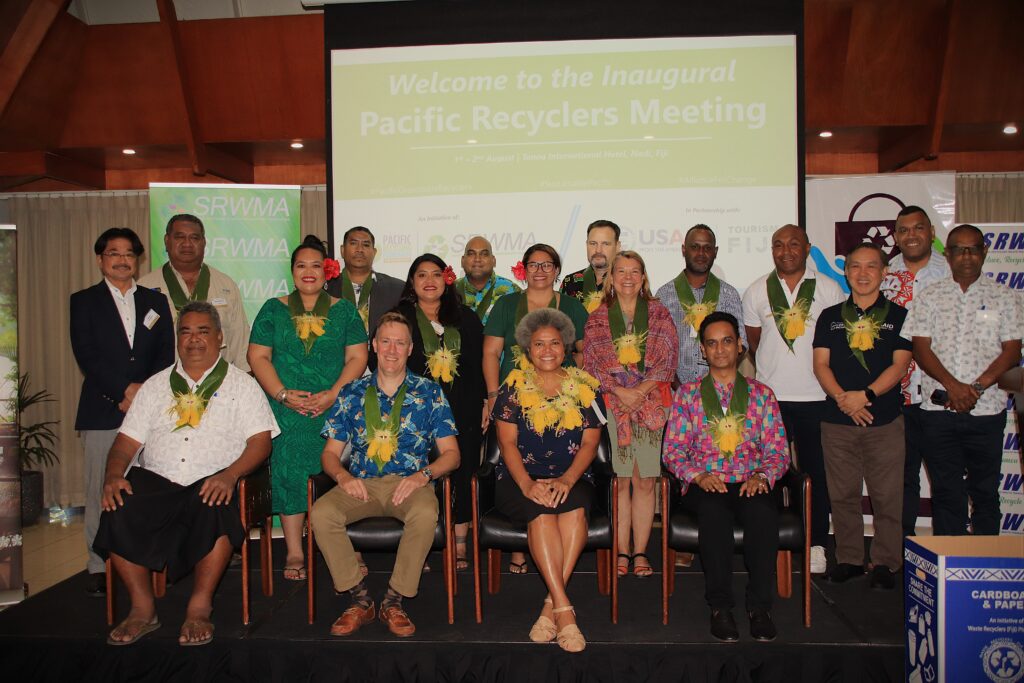
PRA was formed exactly one year ago in Fiji, following the Inaugural Pacific Recyclers Meeting led by PRF in partnership with USAID Clean Cities Blue Oceans. It unites grassroots recycling organisations from six Pacific countries, bringing their collective voices together for the first time in the region’s history.
“This legal registration is more than a procedural step; it is a powerful leap forward in our quest to ensure that grassroots recyclers, which includes our Collection Pillars of Recycling, are no longer sidelined in regional waste management discussions,” said Deo.
“For decades, many of these organisations and individuals have worked in isolation, facing neglect, lack of recognition, and unfair treatment. Today, their voices are not only heard but legitimised.”
PRA’s registration will provide the platform to strengthen advocacy for fair recognition and support of grassroots recycling organisations, mobilise partnerships with governments, development and brand partners, the private sector, and academia for impactful, grassroots-driven recycling projects, secure equitable treatment by lobbying for a fair level playing field that ensures grassroots recyclers are respected, compensated fairly, and not subject to discriminatory practices, and respond collectively to the escalating waste management crisis in the Pacific with innovative, scalable solutions.
“With this registration, we are making a strong plea for partners to come forward. There is an urgent need for climate-related finance and targeted investment to build resilience and ensure that grassroots recyclers, who stand at the frontline of waste management and climate action, are not only recognised but adequately supported,” stressed Deo.
Deo revealed that a few collaborations have started to take shape, including engagement with the University of New South Wales and the ANZPAC Plastics Pact, signalling PRA’s commitment to building evidence-based, regionally relevant solutions.
“Pacific Recyclers Alliance is now better placed to transform recycling from being seen as an informal struggle for survival into a recognised, dignified, and strategic sector that can contribute meaningfully to the circular economy of the Pacific. This registration is a message of hope and unity to all grassroots recyclers across our islands.”
The PRA’s Board of Trustees brings together a wealth of expertise from across health, law, academia, and industry. It comprises Dr. Devina Nand, Head of Wellness at Fiji’s Ministry of Health; Patricia Parkinson, Environmental and International Law Specialist; Dr. Yoko Kanemasu, Associate Professor in Sociology at the University of the South Pacific; and Leigh Howard, Chief Operating Officer at Tropica Group of Companies.
The term ‘CPR’ coined by informal collectors of recyclables is now being recognized in regional literature - Deo

The newly formed Pacific Recyclers Alliance is thrilled to announce key outcomes and significant progress for grassroots recycling efforts and the empowerment of Collection Pillars of Recycling (individuals involved in the collection of recyclables) from the 4th Clean Pacific Round Table (CPRT) organized by SPREP in Tuvalu.
The Secretariat of the Pacific Recyclers Alliance (for Grassroots Organisations), Pacific Recycling Foundation, said this is a monumental achievement for the CPR community and the broader grassroots recycling community.
PRF Founder and the Secretary of the Pacific Recyclers Alliance, Amitesh Deo said the CPRT outcomes include:
- Recognition of the establishment of the Pacific Recyclers Alliance, uniting the six existing National Recyclers Associations to harmonize waste management and pollution control efforts across the Pacific
- Support for the vital role that the Collection Pillars of Recycling play in member states
- Encouragement for Pacific Island Countries and Territories to develop National Recyclers Associations and expand membership and representation within the Pacific Recyclers Alliance.
Deo expressed the alliance’s enthusiasm, stating, “Our voices are finally being heard”.
“The support for the role of the Collection Pillars of Recycling in the CPRT outcomes is a significant victory for the thousands of individuals engaged in the collection of recyclables across Fiji and other Pacific nations. This recognition validates the hard work and dedication of these communities, who are essential to the region’s recycling and waste management efforts,” said Deo.
Deo added, “The term – Collection Pillars of Recycling, originally coined by a group of women in Vunato, Lautoka, once referred to as waste pickers, is now being recognized in regional literature. This marks a pivotal moment as a term created by informal recyclable collectors has ascended to high-level policy discussions, underscoring their critical role and influence in shaping sustainable waste management strategies across the Pacific.”
The term CPR was introduced by the 16 women in 2022, following workshops organized by Pacific Recycling Foundation in collaboration with the International Union for Conservation of Nature, Fiji Women’s Crisis Centre, and Lautoka City Council. These workshops addressed the negative stigma associated with the term “informal waste picker” and replaced it with a more dignified and empowering identity.
Deo said this acknowledgment at the regional level not only elevates the status of informal collectors of recyclables but also strengthens the framework for sustainable waste management practices.
He said the Pacific Recyclers Alliance is committed to continuing its advocacy and support for CPR and grassroots recycling organisations throughout the Pacific.

PRF and SRWMA Convene Inaugural Grassroots Pacific Recyclers Meeting in Fiji

Pacific Recycling Foundation (PRF) and Samoa Recycling and Waste Management Association (SRWMA) convened the Inaugural Pacific Recyclers Meeting, at the Tanoa International Hotel in Nadi, Fiji, from the 1st to the 2nd of August 2024.
This groundbreaking initiative was aimed to foster discussions toward forming a regional recycling alliance, addressing the significant waste management challenges facing the Pacific region.
The Pacific region is at a critical juncture, with waste management issues becoming increasingly urgent.
The first-ever Pacific Recyclers Meeting represented a historic opportunity for grassroots recycling organisations across the Pacific to come together, share experiences, and collectively tackle these challenges. The event included knowledge-sharing sessions, technical training, and capacity-building activities on Circular Economy, Recycling, and Ocean Plastics Pollution Prevention, supported by donor partners such as USAID and Tourism Fiji.
Representatives from grassroots recycling organizations in Papua New Guinea, Solomon Islands, Vanuatu, Tonga, Samoa, and Fiji attended the meeting.
PRF Founder, Amitesh Deo said they are excited to launch this pioneering initiative in partnership with SRWMA.
For too long, many grassroots recycling organisations in the Pacific have operated in isolation, grappling with significant challenges without adequate support or recognition. This event offered a historic opportunity for these organisations to come together, share their experiences, and collectively address the critical issues surrounding waste management.
Samoa Recycling and Waste Management Association’s Co-Founder, Marina Keil said building partnership and collaboration is key.
The meeting was supported by USAID and Tourism Fiji.
