PRF Raises Serious Concerns Over Disrespectful Conduct and Credibility of Waste-to-Energy Public Consultation
Pacific Recycling Foundation has raised serious concerns after participants and observers at the first public consultation on the proposed Waste-to-Energy project at Vuda Point raised that the foreign investor involved in the project described Fiji’s key infrastructure – including waste management systems, recycling, and electricity as a “disgrace” during the session held in Saweni, Lautoka last night.
PRF said such remarks are deeply disrespectful and fundamentally undermine the credibility and integrity of the consultation process.
PRF said it received feedback from attendees following the consultation, indicating that the session fell well short of the standards required for genuine, respectful public engagement. Participants reported dismissive language, defensive responses to questions, and repeated unfavourable comparisons of Fiji to developed countries, setting a troubling tone from the outset.
PRF staff attended the consultation alongside members of the public. Rather than fostering open dialogue, PRF observed a process characterised by limited engagement with concerns raised, repeated comparisons to countries such as Australia, Singapore, Sri Lanka, and parts of Europe, and an apparent lack of sensitivity to Fiji’s social, economic, and institutional context.
“As Fijians, we take strong exception to a foreign investor standing on our soil and allegedly labelling our systems and practices as a ‘disgrace’,” said Amitesh Deo, Founder of Pacific Recycling Foundation.
“Waste management is a crisis in Fiji, and there are clear reasons why it has reached this point, but at no time have we ever called our people or our practices a disgrace, and it never should be.”
Deo said Fiji’s waste challenges must be understood within the realities the country has faced over many years.
“Fiji has battled limited resources, competing national priorities, and factors well beyond our control that have contributed to this crisis,” he said.
“That context matters. You cannot erase decades of constraints and then shame a country for not looking like a developed economy overnight.”
PRF strongly rejected direct comparisons between Fiji and countries with decades of investment, regulation, and enforcement already in place.
“Recycling is not yet embedded in our culture or upbringing in the same way it is in developed countries. Comparing Fiji directly to countries that have had decades of systems, funding, and enforcement ignores reality and shows a lack of understanding of our journey.”
PRF is particularly alarmed by disclosures made during the consultation that the proposed facility would require approximately 900,000 tonnes of waste annually to operate at full capacity, with 200,000 tonnes sourced locally and the remaining 700,000 tonnes imported from overseas, including Australia.
Questions were raised regarding environmental and public health impacts, including potential respiratory and reproductive health risks, impacts on elderly populations, and the capacity of existing health systems to cope.
While project developers claimed studies had been conducted, no detailed findings or evidence were shared.
“If you are proposing a project of this scale, you must be able to clearly explain the risks to the people who will live with the consequences,” Deo said.
“When communities ask direct questions and are told ‘we will see later,’ trust is immediately eroded.”
PRF reiterated its concern that under Fiji’s current waste management system, where waste is largely collected as mixed waste and transported directly to the landfill and dumpsites, there is an extremely high risk that recyclable materials would be diverted into the plant. Questions regarding guarantees that only non-recyclable residual waste would be used were not answered.
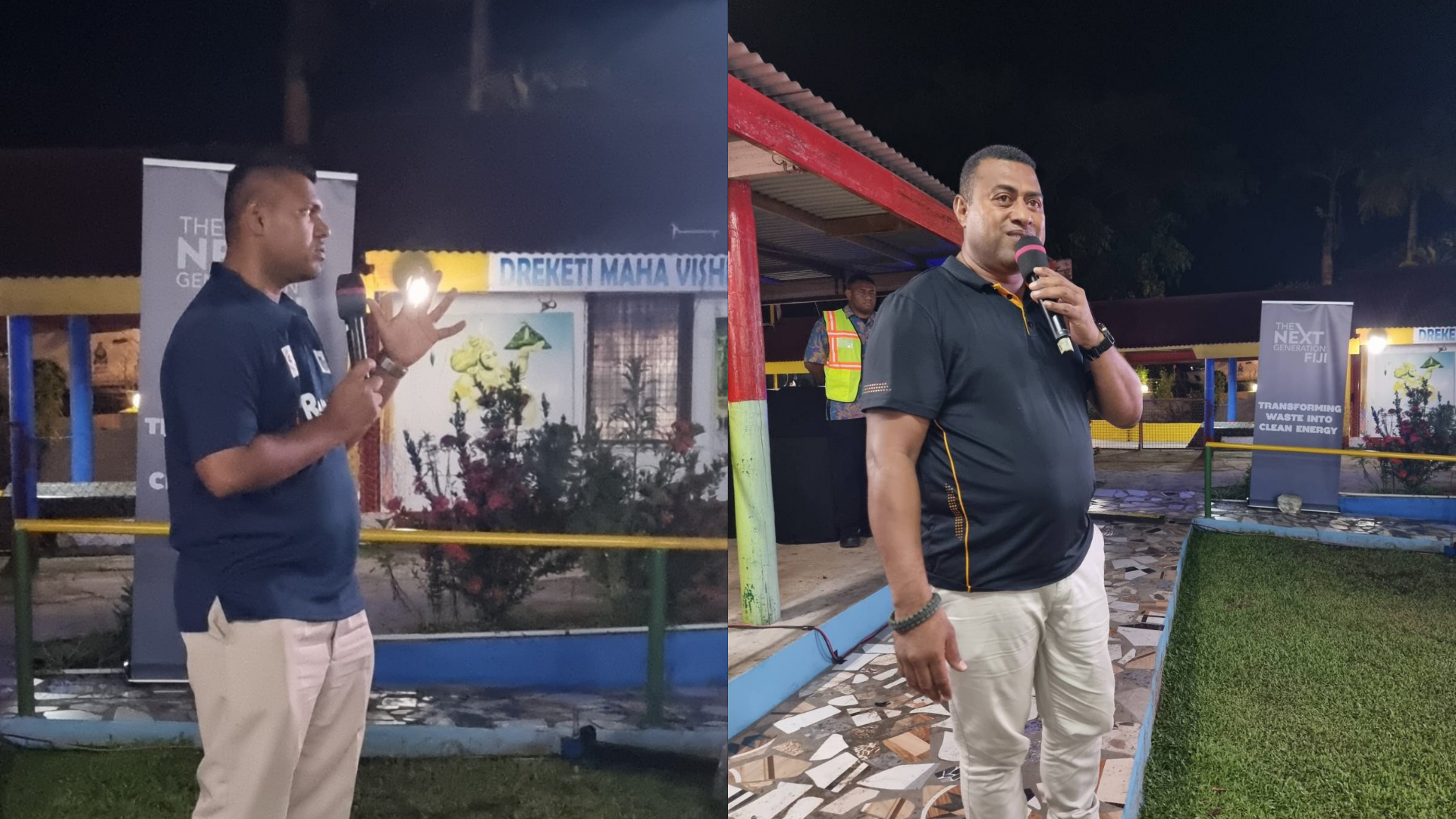
Waste Recyclers Fiji Limited’s Corporate Relations Manager, Josaia Cava, who represented PRF at the consultation, said respect for the land and its people must be the starting point of any project.
“This foreign company needs to show more respect to the people of this land,” Cava said.
“You can have millions of dollars, but if there is no respect, then it shows you do not truly care about our people or our beautiful Fiji.”
WRFL’s Lautoka Branch Manager, Zoheb Shah, also addressed the consultation, pointing to serious gaps in the process.
“A proper risk assessment was clearly not done, and house-to-house surveys were not carried out,” Shah said.
“It would have been far better if all risks had been identified and mitigation plans presented to the community. Not a single question was answered fully or properly, and that created unnecessary confusion and frustration.”
PRF noted that by the end of the consultation, an overwhelming majority of participants expressed no support for the Waste-to-Energy project, with strong calls for recycling to be prioritised instead.
Meanwhile, Deo stressed that a “consultation” should not be confused with an awareness session.
“You do not invite people simply to listen and then speak down to them when they raise concerns. That is not engagement, and it is not acceptable.”
“Fiji deserves partners who listen, respect our people, and work with us – not partners who lecture us or belittle our realities,” Deo said.