Pacific Recycling Needs Local Solutions, Not Imported Models, Says PRF
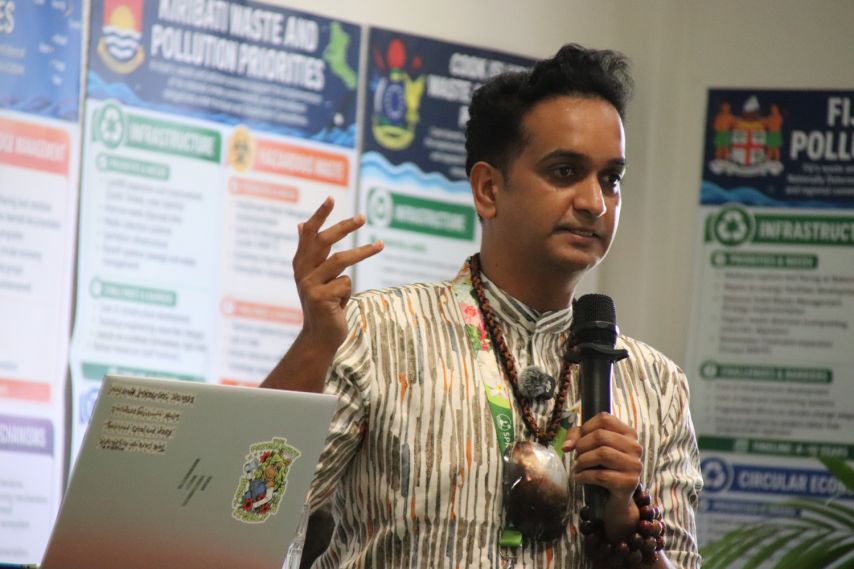
The Pacific Recycling Foundation (PRF) has called for greater recognition of grassroots recyclers, Collection Pillars of Recycling (CPRs) and Pacific-based organisations in the development of regional waste management and recycling policies, following discussions at the Circular Policy Co-Design Workshop & Training in Port Vila, Vanuatu.
Held from 16–18 September, the regional workshop brought together regional partners to explore approaches to circularity and recycling, including extended producer responsibility (EPR), private-sector investment, jobs and value creation, and the development of a policy roadmap for Pacific-level agreements.
During the workshop, PRF Founder Amitesh Deo highlighted the need for regional approaches to recognise the people and organisations already developing practical recycling solutions within Pacific communities.
“Pacific communities have been doing this work for a long time, yet the lived experience of grassroots recyclers and the work of Collection Pillars of Recycling is still not sufficiently reflected in the way policies and solutions are developed,” said Deo.
“We should not have to keep looking outside the Pacific for answers when we already have people on the ground who understand the challenges, have tested solutions and know what works in their own communities.”
Deo said effective recycling systems require a holistic approach that goes beyond collection and infrastructure to include behaviour change, community engagement, data, recycling systems and long-term support for the organisations and people at the heart of the work.
“Grassroots recyclers cannot be treated simply as part of a collection system or grouped broadly under the private sector,” he said.
“They are a distinct and important part of the recycling system, and the organisations working alongside them also need to be recognised and strengthened, including the Collection Pillars of Recycling that are helping build practical systems within communities.”
PRF also highlighted the need for regional policy discussions to create stronger pathways for grassroots and rights-based organisations to contribute to policy development and implementation.
Deo said strengthening Pacific-led organisations would help ensure that recycling solutions are grounded in local realities and can be adapted across different Pacific Island countries.
“If we want grassroots recyclers to be empowered and supported to grow, we also need to strengthen the Pacific organisations working with them,” he said.
“These organisations understand the local context and the realities of waste management in their communities. Supporting them is part of supporting the recycling system itself.”
Deo said the Pacific now has an opportunity to build on existing experience rather than creating parallel approaches that overlook locally developed solutions.
“Our experience shows that grassroots-led recycling can work. The question is whether we are prepared to recognise that experience, learn from it and invest in strengthening what already exists,” he said.
PRF will continue to advocate for grassroots recyclers, CPRs, community organisations and Pacific-led solutions to be meaningfully recognised in regional policy, partnerships and investment.